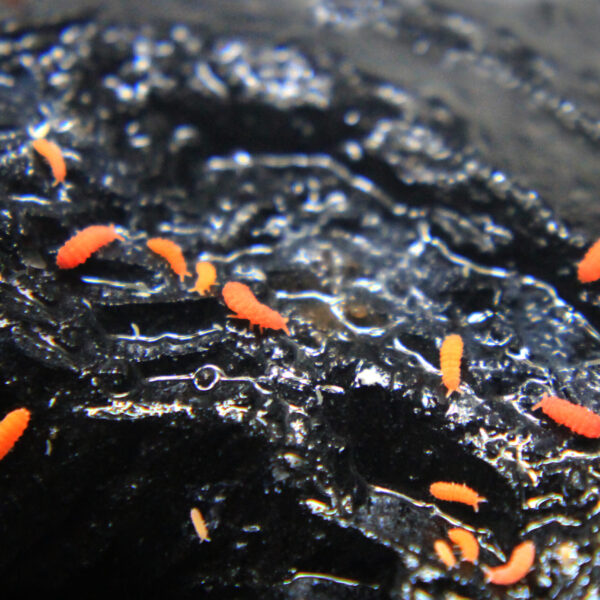

Tropical Springtails for Terrariums — Live Microfauna for Tropical Bioactive Enclosures
Compact, hardy, and efficient decomposers, tropical springtails are ideal for humid, tropical-themed terrariums, vivariums, and compost bins. These tiny, wingless hexapods (1–3 mm) feed on decaying plant matter, fungi, and mold, helping control micro-mold and accelerating organic breakdown—improving substrate stability and overall enclosure hygiene.
Key Features
- Purpose: Natural decomposers and microfauna for tropical bioactive setups, vivariums, reptile and amphibian enclosures, composters, and lab cultures.
- Size & Form: Very small (1–3 mm), pale/off-white body—easy to hide in substrate and litter.
- Temperament: Non-aggressive, safe with most small invertebrates and juvenile reptiles/amphibians.
- Diet: Prefer fungal hyphae, decaying plant material, and microbial biofilms; also accept powdered feeds (brewer’s yeast, fish food flakes).
- Reproduction & Culture: Rapidly reproducing species—easy to maintain and scale in moist, warm substrate or culture media.
- Environment: Thrive in warm, humid, shaded conditions; optimal temperatures ~15–28°C. Sensitive to direct sunlight.
- Benefits: Reduces visible mold, recycles waste into accessible nutrients, provides live micro-prey for microfauna and very small species, and contributes to a balanced micro-ecosystem.
Care & Use (Quick Guide)
- Housing: Use shallow containers with ventilation; add moist substrate (coconut coir, peat, or soil) and a moisture-retentive microclimate.
- Feeding: Supplement occasionally with small amounts of brewer’s yeast, powdered spirulina, or crushed dry pet food. Avoid overfeeding to prevent foul odors.
- Maintenance: Keep substrate consistently damp but not waterlogged; mist lightly. Harvest surplus springtails with a spoon.
- Compatibility: Safe with isopods, springtail-friendly plants, bioactive tropical vivarium setups, and many small amphibian or reptile species—watch for predatory tankmates that will eat them.
Packaging & Quantity Options
- Starter Culture: Small vial for establishing a culture in a terrarium or lab.
- Colony Pack: Larger container for ongoing supply or seeding multiple enclosures.
- Bulk/Culture Bricks: For breeders, labs, or large bioactive projects.
Why choose tropical springtails? They’re resilient, reproduce quickly, and are one of the easiest microfauna to culture—especially suited for warm, humid enclosures—making them ideal for hobbyists, educators, and researchers who want a low-maintenance microfauna solution to improve substrate health and reduce mold.
Careful note: Keep cultures away from extreme heat and direct sunlight; maintain humidity for best results.